What does VALORANT Champions Shanghai group stage day 7 decide for the sixteen teams chasing the world title?
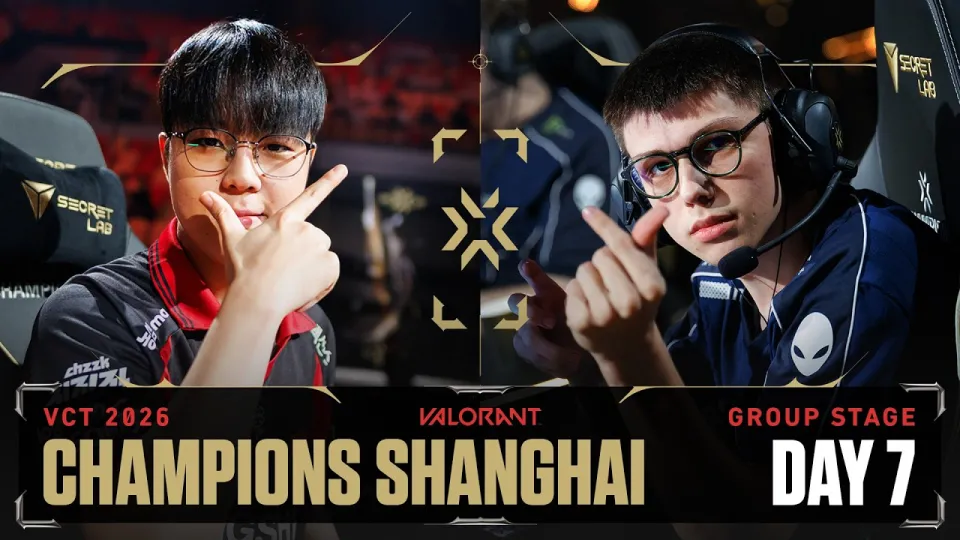
Video: VALORANT Champions Shanghai — Group Stage — Day 7
Need articles like this for your video? They help promote it on YouTube and Google — order them in the Telegram bot @sat_sit_bot. Articles with your video embedded are written and posted by the bot itself — on popular topical sites (no ads). Free trial — 50 articles.
VALORANT Champions Shanghai is the 2026 world championship, and its group stage day 7 is the point where the opening phase stops being a formality: sixteen teams from Americas, CN, EMEA and Pacific are squeezed into a bracket where only the top seeds survive, and every remaining series reshuffles who advances directly and who drops into an elimination path. Day 7 of the group stage is therefore about seeding and survival rather than spectacle alone, and the official VALORANT Esports X account is where brackets, schedules and results get confirmed as the day unfolds.
Why day 7 of the group stage matters more than earlier days
Day 7 is the last real chance for teams to control their own bracket fate. The event runs September 24 to October 18, and the group stage compresses sixteen rosters into a playoff field, so by the seventh day most groups are decided by map differential and head-to-head rather than raw series wins. A team that is already 2-0 in its group can still lose a top seed by dropping a single map, while a 0-2 team can stay alive by winning cleanly and hoping the tiebreaker math falls its way. That is why analysts watch round scores as closely as series scores: a 13-11 loss costs less than a 13-3 loss when three teams finish with identical records.
The sixteen-team field and how the regions stack up
The Shanghai field is built from four regions, and the balance between them is the story of the 2026 season. Americas and EMEA bring the established organizations that have dominated international playoffs for years, Pacific brings the mechanically aggressive rosters that have repeatedly broken those organizations, and CN arrives with home-crowd pressure and a point to prove. The season description for Shanghai frames it as a generational shift: two different Masters champions were crowned in 2026, expectations were broken, and a fearless group of challengers now has one tournament to convert that momentum into the biggest trophy of the year. In practice that means the group stage is not a warm-up for the favorites; it is where the new contenders either validate their Masters runs or get exposed by teams that peaked later.
Reading the day 7 schedule without spoilers
Group stage days are long broadcasts, and day 7 is no exception, so the practical approach is to watch with spoilers blocked and timestamps ready. Viewers of the official VOD routinely ask for a spoiler-free timestamp list because the stream jumps between series, analyst desk segments and technical breaks, and a single glance at the scoreboard in the corner gives away a result. The reliable method is to open the VOD, note the chapter markers, and skip the desk segments entirely if you only care about the matches. If you want live results instead of a replay, the official channels publish them in real time, and the Shanghai broadcast is carried on Twitch at https://www.twitch.tv/valorant as well as the VCT YouTube channel.
Technical pauses and what they do to a group stage day
Technical pauses are the most repeated complaint about long group stage broadcasts, and day 7 drew the same reaction. A pause freezes momentum in a way that matters in VALORANT specifically: utility setups, economy planning and pistol-round confidence all depend on rhythm, and a ten-minute break between maps can reset a team that was rolling. From a viewer's perspective, pauses stretch a broadcast past its scheduled window and make spoiler-free watching harder, because the VOD timeline no longer matches the published schedule. Production teams usually fill the gap with replays and desk analysis, which is why some viewers ask for edited timestamps that skip the downtime altogether.
The CN question that dominated the chat
The most heated debate around day 7 was whether the Chinese teams deserved their group stage positions. Critics pointed to lost eco rounds, blown 5v2 retakes and predictable utility usage once set plays broke down, arguing that stronger rosters from other regions missed the event entirely. Defenders countered that the home region's results are a product of a compressed domestic schedule and a meta that rewards structured defaults, which international opponents punish faster. Both readings are testable across the rest of the group stage: if CN teams convert their set strategies into early map leads they stay competitive, and if opponents force chaos in the mid-round, the structural gap shows. That tension is exactly what makes the remaining group stage series worth watching rather than skipping.
How to follow results, brackets and announcements
The official VALORANT Esports channels are the only reliable source for bracket updates during a live event. Results and schedule changes appear first on X, match VODs land on the VCT YouTube channel, and the news hub at https://www.valorantesports.com/news carries official statements, including any rulings on technical issues. For photographs from the venue, the official Flickr account publishes sets after each day. If you are tracking a specific team's path, follow the bracket rather than the broadcast order: group stage days are scheduled for viewers in multiple time zones, so the series order on stream does not always match the standings order.
Useful links
- Official VALORANT Esports updates on X: https://x.com/valorantesports
- Facebook: https://www.facebook.com/ValorantEsports/
- Instagram: https://www.instagram.com/valorantesports/
- TikTok: https://www.tiktok.com/@valorantesports
- Live broadcast on Twitch: https://www.twitch.tv/valorant
What day 7 tells us about the Shanghai playoff picture
Day 7 of the VALORANT Champions Shanghai group stage is where seeding stops being theoretical and starts deciding matchups, so the teams that leave it with clean map scores gain a real structural advantage in the playoff bracket. The 2026 season already delivered two different Masters champions, which means Shanghai is the first event where that new generation has to prove itself against the full sixteen-team field rather than a single regional sample. Technical pauses and broadcast length are annoyances, but the competitive signal is clear: eco discipline, mid-round adaptation and utility creativity separate the teams that advance from the ones that only look good on paper. This breakdown follows the official broadcast published by the VALORANT Champions Tour, and the fastest way to keep tracking brackets and results is the VALORANT Esports X account, where schedules and standings are posted as each group stage day closes.
Key takeaways
- VALORANT Champions Shanghai runs September 24 to October 18, with sixteen teams from Americas, CN, EMEA and Pacific.
- Day 7 of the group stage is the final stretch of the opening phase, where remaining playoff seeds and elimination brackets are settled.
- The 2026 season already produced two different Masters champions, so Shanghai is the first true world-title decider of the year.
- Group stage matches are best-of-three, so a single map loss can flip a team's tiebreaker position.
- Live updates and announcements come from the official VALORANT Esports X account: https://x.com/valorantesports
Source: VALORANT Champions Shanghai — Group Stage — Day 7 · Markdown version
Questions & answers
How many teams play at VALORANT Champions Shanghai?
Sixteen teams qualify from four regions: Americas, CN, EMEA and Pacific. They are split into groups during the group stage, and the surviving rosters move into the playoff bracket to compete for the world title. The event runs from September 24 to October 18.
Why are there so many technical pauses during the group stage broadcast?
Long tournament days combine live server issues, player hardware problems and production checks between maps, and each pause extends the broadcast. Pauses also disrupt team momentum, which is why viewers often ask for edited timestamps that skip the downtime when watching the VOD.
Are the Chinese teams at Shanghai weaker than other regions?
It is a fair debate rather than a settled fact. Critics point to lost eco rounds, failed retakes and predictable utility once set plays break, while others argue the CN meta rewards structure that international opponents punish faster. The rest of the group stage is the test of which reading holds.
Where can I find spoiler-free results and brackets for the group stage?
Use the official VALORANT Esports channels: X for live bracket and schedule updates, the VCT YouTube channel for match VODs with chapter markers, and the official news hub for statements and rulings. Following the bracket rather than the stream order keeps you oriented across time zones.